 March 25, 2018. After last night’s disturbing phone call from Mom about Dad’s fall, I wanted to get an early start to Temple so that I could be there during Dad’s surgery. I was up by 5:30 A.M., called Mom 45 minutes later to let her know that I was coming, and left home at 7:40 A.M. Because of my early departure, and some good highway luck, I arrived at my parents’ home at 10:15 A.M. I quickly unpacked my car, drove to Scott & White Hospital, and made my way to room 566 in the south tower.
I had just missed the surgeon, who had stopped by to tell my parents that barring any emergency surgeries, Dad’s surgery was scheduled for that afternoon at 1:20 P.M. Shortly after I arrived, Dr. Karla Bolanos, Dad’s attending physician for the week, stopped by to visit with Dad. Dad was very charming and witty, giving her the impression that he was a cooperative patient. At this stage of the process, he actually was very cooperative because he had no idea what was in store for him.
 The doctor said that Dad would have his first physical therapy session and evaluation the day after his surgery. Following the surgery, he would remain in the hospital for 2-3 days and then move to a rehab facility for two weeks of rehab. It was at this point in the conversation that Dad balked and said that this plan didn’t work for him. He had no intention of going to rehab; he was needed at home. Unfortunately, Mom seemed to agree with Dad. In an attempt to sell my parents on the notion of rehab, I related the story of their friend Sally and her experience with rehab after her hip-replacement surgery, but my parents were not swayed.
Shortly after Dr. Bolanos left us, I left the room to call Stan and my friend Rhoda, both of whom wanted an update on Dad’s condition. On the way to the lobby, I saw the doctor at the nurse’s station and spoke with her about Dad’s diuretics, his swollen legs, and I requested that she order an infectious diseases specialist to check Dad to see if he still needed the antibiotics to suppress infection in his lungs. She appreciated knowing about the diuretics but said that Dad would need to take suppression antibiotics for the rest of his life. Furthermore, she said that he needed the antibiotics because of his new heart valve. It seemed to me that he needed the antibiotics for a couple of good reasons. Because antibiotics can affect the kidneys, I had hoped that he could quit taking them, but the doctor dashed that hope.
 When I finished making my phone calls, I returned to Dad’s room. Dr. Bolanos returned to the room a few minutes later and told us that they had noticed a spot on Dad’s heart that looked like a clot. Before they could operate on Dad’s hip, they would need to run some tests, which were scheduled for tomorrow. By now it was 12:30 P.M., and Mom and I were hungry and decided that we would leave Dad for an hour and go home for lunch. When we returned to Dad’s room, because his surgery was rescheduled for tomorrow, his NPO restriction had been lifted, and he was eating lunch and complaining about the food. Some things never changed.
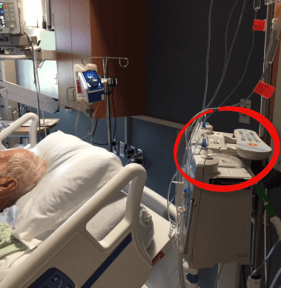
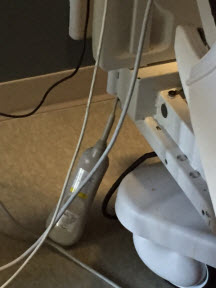
At 3:30 P.M., an imaging tech arrived with an ultrasound machine to scan Dad’s legs for blood clots. She couldn’t tell us anything, and we assumed that we’d hear something soon from the doctor.
Shortly before 5:00 P.M., Mom and I left the hospital for home, having not seen any medical providers after the imaging tech left the room.
March 26. Mom and I arrived at Dad’s room shortly after 9:00 A.M. Dad said that he had been told that his surgery was scheduled for 1:20 P.M. Dr. Bolanos stopped by the room and told us that Dad was scheduled for a VQ scan at 10:30 A.M. I had never heard of a VQ scan, but I learned that it evaluates the circulation of air and blood within a patient’s lungs. The transportation tech arrived 10 minutes before the scheduled time and transported Dad to the procedure location. Not knowing how long he would be gone, Mom and I started getting antsy when he hadn’t returned by noon—especially because he was scheduled for surgery at 1:20 P.M. We didn’t want the surgery rescheduled for tomorrow. We also didn’t want to leave the room for lunch and risk missing the doctor.
 Dad was returned to his room at 12:15 P.M., and a couple of minutes later, we were told that he was still scheduled for surgery today. Less than 30 minutes later, another transportation tech arrived to take Dad to the OR prep area. Mom and I were both allowed to accompany him. Dad wasn’t in favor of my coming, but I wanted to speak with the anesthesiologist. Dr. Daniel Stahl, the surgeon, stopped by to tell us about the surgery. He said that Dad would need three pins and that unless they found something different from what they had seen on the x-rays, the procedure should take less than two hours.
I told the anesthesiologist that following Dad’s previous two surgeries, he had had a heck of a time dealing with the anesthesia. For three to four days, he had been very confused and had had hallucinations of animals, insects, and water in the room. The anesthesiologist said that he had Dad for his second surgery in May 2015. He said that if this surgery lasted no more than 90 minutes, he could use a spinal tap. Dad would be aware of what was happening, but he wouldn’t have any pain, and he would not suffer the after-effects of the anesthesia. He said that he would confer with the surgeon and try using a spinal tap if we agreed that was the route that we wanted to take. He thanked me for the update on Dad’s history, and Mom and I hoped that we had found a solution to Dad’s post-op dramas. While we were speaking with the anesthesiologist, the nurses were having a heck of a time finding a vein so that they could type and screen Dad’s blood.
 When the nurses had finished drawing Dad’s blood, Mom and I made our way to the OR waiting room. After waiting for about an hour in the freezing-cold room, we were pleasantly surprised to see Tom, my parents’ pastor. I don’t know how he found us, but pastors seem to know their way around hospitals. We had a nice visit with him, and during our discussion, I mentioned my concern about Dad’s reluctance to go to rehab. I hoped that Pastor Tom would be able to have a guy-to-guy talk with Dad sometime before he was discharged from the hospital. After talking with Mom, I learned that part of her reluctance to send Dad to rehab was because of the promise that my parents had made years ago to not put the other in a nursing home. I explained to her that he would be admitted to the temporary resident section of the skilled nursing facility, not the permanent resident section, commonly referred to as a nursing home. I think that she felt somewhat better about rehab after our discussion.
Just a few minutes after Pastor Tom left us, the surgeon arrived to tell us that the surgery had gone well. Unfortunately, because of Dad’s spinal compression, the anesthesiologist was not able to use a spinal tap and had to use a general anesthetic after all.
Oh, joy.

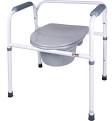 commode that we kept in the common area of the bathroom. Having it in a more open area enabled the aides to transport him to and from the commode, a contraption that he loathed. After helping him into the bathroom to use the dreaded bedside commode, Gale and I were able to convince him to go back to bed. Thankfully, he remained in bed until 8:30 A.M., at which time I administered his trach care and morning meds. I was still a rookie with the trach care and the process took about 45 minutes.
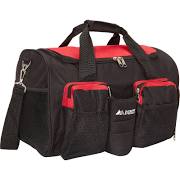 also needed to bring a blanket, a box of tissues, and various other items. Gale told Stan that instead of Mom’s Elizabeth Arden tote bag that we were using to transport his dialysis accessories, Dad needed something larger and more masculine, like a duffle bag. Stan wasn’t sure what she had in mind, but he eventually found a gym bag that she deemed perfect for the task.
 During dialysis, Dad used oxygen tanks from the dialysis center, but this service did not include the moisture that he needed to keep his trach moist. In an attempt to compensate for the lack of moisture, Timothy from American HomePatient had provided us with several bibs composed of a porous non-woven material. The bib was placed between the trach and the oxygen source. The bib wouldn’t stay moist for more than 30 minutes, so we kept a small spray bottle in his dialysis bag, and Gale was vigilant about keeping the bib wet.

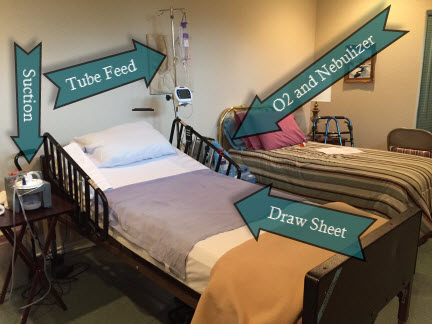 I returned home from the pharmacy just after 5:00 P.M. and the guys from
 After Jennifer left the room, Dad asked me about “all of the buildings that he was going to travel through.” I explained to him that to get home, he wouldn’t travel through buildings, but that his ambulance would take him home via the Loop and 31st Street. I drew him a bad, oversimplified map of the area and explained where everything was and the distances between them. He had been hospitalized so long that he was confused, thinking that there was a difference between our house and our home. He then told me that it would be prudent to get him a bedpan, so I called the nurse and left his room.
 At 11:00 A.M., Angela returned, and my respiratory therapy training ratcheted up a notch. In addition to suctioning Dad today, she said that I would
  While I was sitting with Dad, Angela returned to the room with printed instructions about how to suction and change out a trach. Dad was sleeping, so I decided to read the entire document. I write technical documentation for a living, and although I’m not diligent about always reading it, this seemed like a good time to read the manual. I was glad that I did. When Angela stopped by again, I told her that the two other respiratory therapists had had me insert the tubing much further into Dad’s trach than the instructions advised. She told me that she had noticed that I had performed deep suctioning on Dad, but that it wasn’t necessary. When I changed my suctioning technique, I found that suctioning didn’t hurt Dad the way it did with some of the respiratory therapists. I was glad that Angela was now my trainer. I recalled how Dad had told her that she was different from the other respiratory therapists and how he didn’t like others, like Victor. Angela had me suction Dad the rest of the day, and by the end of the day, I was somewhat comfortable with the procedure, although I still had to psych myself up for it.
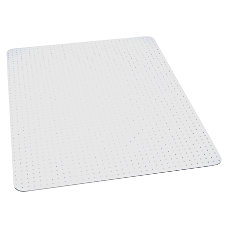 If you spend any time at a hospital, you quickly learn that healthcare is a dirty business and the floor is difficult to keep clean. My parents’ house, including their bedroom, was carpeted with a beautiful sea green carpet. We were pretty certain that the carpeting would not survive Dad’s home care. One of Stan’s assignments was to figure out how to save the carpet. He eventually decided on chair mats. He bought out the supply of rectangular mats at Staples and Office Max and then worked out the arrangement of the mats in the bedroom. In addition to protecting the floor, the mats provided a relatively hard surface and protected the carpet from some of the heavy equipment and the wheelchair that would be brought into the room. He also purchased some shelving and boxes that we would need for storing medical supplies. Thank goodness my parents’ bedroom was large enough to accommodate everything.
 Shortly after we arrived, I went to the nurses’ station to see Jennifer. She said that she had been waiting for me to arrive so that I could administer Dad’s morning meds. At practically the same time, Dr. Smith arrived and we discussed Dad’s feeding tube and his invasive lines. I agreed with the doctor that because of its upkeep and the potential for infection, we wanted the
  I returned to the hospital at 2:00 P.M. to find that Jennifer and the aide were giving Dad a bath. When they were finished, Jennifer and I maneuvered Dad into the wheelchair. Jennifer thought that he was a bit weaker than yesterday and said that she wanted him back in bed in about an hour. It was a nice day, so after I had Dad cough up some secretions, we headed outside in the wheelchair. We strolled on all of the available sidewalks, which still wasn’t much of an outing, and then settled under the covered hospital entrance. While we were sitting out front, Stan and Mom drove up and visited. Stan could stay for only a couple of minutes because they had been grocery shopping and he had to get the perishables home. Mom and I visited outside with Dad until 3:25 P.M. Shortly after the three of us returned to Dad’s room, Jennifer, Hector, and I put him back in bed. Mom and I visited with Dad until about 4:30 P.M.
 Stan and I stayed up late to watch the total lunar eclipse (blood moon). While watching the moon, my dear friend Rhoda texted me to see how I was doing. I quickly called her to let her know about the miracle and our change in plans.
 We met with the representative from Scott & White and although she seemed very professional and they would provide a good service, we were sick and tired of this organization and wanted to cut our ties with them. I confess that I entered the interview with a somewhat closed mind and I didn’t note the name of the person whom we interviewed. I wish that I had because I owe her a debt of thanks. Knowing that we would need some very expensive assistance, she gave us the name of a company that provided 24×7 care. The company was
  Before she left the CCH yesterday, Mom left her cell phone with Dad so that he could call her if necessary. He called her early in the morning to see if she was awake. He then called her later in the morning to tell her that someone had broken his electric shaver. He could be a pill with a phone.
 When I arrived, I met Dr. Ciceri and he explained to me that Dad had something that sounded like “the Canada fungus.” He said that they planned to replace his dialysis catheter and his PIC line. The doctor had also started Dad on an antifungal. He said that he requested a TTE (transthoracic echocardiogram) for later today. I didn’t understand the significance of most of what he said, but I clearly understood what he said next. He said that Dad’s prognosis was extremely poor, that he probably had one to two months to live, and would most likely die in a nursing home.
 At 9:40 P.M., I was awakened by the house phone, and I ran to answer it before it woke Mom. As far as we were concerned, there was nothing worse than a nighttime phone call. My parents’ phone system had an audio caller ID. My heart practically stopped when I heard it announce that the call was from Scott & White. The call was from Jeliza, Dad’s nurse. According to her, Dad insisted that he wanted to go home and that he had seen Mom in the hall. He kept calling out for her, and the nurse couldn’t calm him. She hoped that my mother or I might be more successful. Jeliza held up the phone to Dad’s ear while I explained to him that we had been in his room until 6:00 P.M., but that he had been asleep. He asked me when we would return to see him again, and when I said, “tomorrow,” he asked if we’d come by early. When I told him that we’d see him after dialysis, he said that he wasn’t going to dialysis anymore and that he would go someplace else. I explained that going someplace else would require advance planning and that we couldn’t make alternative plans on a Sunday night. I promised him that Mom and I would be there and that I’d visit with him before I left for Houston. He agreed to that plan and we said good night. The nurse took back the phone and thanked me for talking with him.
 Mom and I arrived at the
 Every morning, the doctor, nurses, or both, performed a short assessment of Dad’s mental status. From the third week after he entered the Scott & White system, he had been unable to tell the medical providers the name of the president of the United States. Although there might have been a few days in which he couldn’t remember, I suspect that most of the time he was being stubborn. He wasn’t a fan of President Obama and forgetting his name was a personal protest of Dad’s. I sometimes wondered if his refusal to acknowledge the president affected the assessment of his mental status.
 September 12. Mom and I arrived at the CCH at 8:00 A.M. Dad was still restrained and his call button was on the floor. John, Dad’s nurse, told us that his heart rate had been elevated to 135 and he became
  Tale of Two Parents