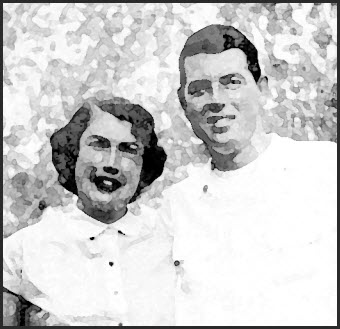
July 23, 2015. Dr. Anderson called me at 5:30 A.M. and told me that they still were unable to raise Dad’s blood pressure. His EKG had changed and the doctor suspected that Dad had suffered a heart attack. The doctor wanted to know how aggressive we wanted to be in his treatment. They were limited with what they could do at the CCH, and if they kept doing what they were doing, Dad would die in one to two hours. They might be able to help him at the main hospital (Memorial), but with his age and current situation, Dr. Anderson recommended that we think about how much more we should so. I woke Mom to confer with her, and she wanted to do everything possible. I called Dr. Anderson back with our decision, and he said that Dad would be at Memorial in about an hour. Considering that he projected one to two hours for my father to live, the hour-long trip to the other hospital made me a little nervous.
 When I got off the telephone with Dr. Anderson, I texted Pastor Don and my husband about Dad’s situation. Mom and I got dressed and headed to Memorial. We didn’t know where to go, so we headed to what we knew: the Cardiothoracic Intensive Care Unit (CTICU) nurses station in the north tower of the hospital. We arrived at 5:50 A.M., and it occurred to me that we arrived at the same time on May 6 for Dad’s original surgery. We asked the CTICU nurses about Dad’s whereabouts, but either he had not arrived, or he was not yet in their system.
While at the CTICU nurses station, we saw a couple of nurses and respiratory therapists that we knew, and they showed us to the Medical ICU (MICU) waiting room in the south tower. While we were waiting, personnel from the day shift started arriving. As Kelli, one of the charge nurses from CTICU, walked through, she was startled to see us. We quickly apprised her of Dad’s condition, and she hurried off to see what she could learn about his whereabouts.
At 8:00 A.M., we were still sitting in the MICU waiting room, waiting to learn more about Dad’s condition and see him. We saw Jordan, a PA, and Dr. Sai, both of whom said that they would check on Dad and get back to us. When we were finally called to Dad’s room, we were met by Dr. Sanchez, who was the presiding physician that week. He said that Dad was stable, but his condition was grave and the doctor didn’t think that Dad would survive. He said that they would know more in 48 hours. I was so anxious for anything positive, the fact that he even mentioned a time beyond today seemed like good news.
 Evidently, when Dad arrived from the CCH, he was on three vasopressors and his MAP was in the 40s, which is way below minimum. Now, he was receiving more than the maximum dosage of five vasopressors to keep his blood pressure at a MAP of 65, which is a minimum level. When asked by Dr. Sanchez about the extent to which we would go, we said that we wanted to do everything possible, stopping short of restarting his heart, should it stop.
Our first couple of hours in Dad’s room were like a tragic welcome-home event. Addison, one of Dad’s speech therapists, stopped by to say “hello.” Adan from the CCH had called her and told her about Dad’s episode. Dr. Velazco, another of the physicians who rotates through the ICU, stopped by. He still wore scrubs from surgery and was very upset about Dad. Occasionally, we were asked to leave Dad’s room, and during those times I kept encountering nurses and therapists from his earlier stay at Memorial. They were all shocked and generous with their supporting hugs.
After Dr. Sanchez and his entourage left, we got to know Tina and Andrea, the two nurses assigned to Dad. I really liked them and the way in which they cared for Dad. For all intents and purposes, the doctors had told us that Dad was a lost cause, but you wouldn’t know it from these two women. I also came to depend on Charis, a resident who was assigned to Dad. Lynette, the case manager, was also very attentive and told us to contact her if we needed anything. I suspect that she thought that Mom and I would need her assistance when Dad died.
 Throughout Dad’s stay in the Scott & White system, I had developed a steely resolve to stay positive and to keep my parents positive. The last six hours had severely cracked my armor. When Charis first entered the room to talk with us about Dad and how the doctors were expecting his death, I sort of lost it. While fighting back tears, I started telling her that what I was feeling was like Orpheus watching Eurydice slipping back into Hell. The only light moment of the day came when my mother commented about the startled look on Charis’ face when I interjected Greek mythology into her briefing.
As the day progressed, Dad’s condition seemed to worsen. The doctors continued to administer broad-spectrum antibiotics. Only 24 hours earlier, his WBC count was 5.6. It was now approaching 13 and he was non-responsive to pain. In addition, he had developed septic shock, severe acidosis, and his liver was in shock. The doctors thought that putting him back on dialysis might help with the acidotic condition. Shortly before noon, Carlos, the dialysis nurse, arrived and started the eight-hour dialysis session. Dad’s blood pressure dropped, so they stopped removing fluid.
Around 12:30 P.M., Dad seemed to recognize me. I took that opportunity to tell him that I had purchased an indoor skydiving session for my husband for his birthday. He made a face, which seemed like the response that I would have expected from him. Around 1:00 P.M., Andrea was able to get him to squeeze her hand. She also touched some gauze to his eyes to see if he would react. Bases on his responses, Andrea thought that, neurologically, he was doing better. He had not reacted to any type of stimuli, including pain, when he was admitted.
 When Mom and I went to lunch, we stopped by the CCH to pick up Dad’s belongings and flowers. Live flowers are not allowed in the ICU at Memorial. When we returned to Memorial around 2:30 P.M., he was wrapped in a Bair Hugger (heating blanket). His core temperature was now too low, partly because of the dialysis, and they needed to raise it.
During the remainder of the day, a variety of therapists and specialists stopped by to take blood and administer trach care and oral care.
As news of my father’s return spread through the ICU, more nurses stopped by his room. One unexpected visitor was Peggy, a hospital employee who monitored central (PICC) lines. She stopped by the room because she recognized us. We chatted a few minutes, and Mom and I quickly learned that she was not a fan of the CCH. She encouraged us to contact Patient Relations about the CCH and our experiences there.
Mom and I went back to the house for a late dinner break and didn’t return to the hospital until 8:00 P.M. We didn’t plan to stay long, but felt that we needed to meet his night nurse, Rebecca. Dad was off dialysis and his blood pressure was up, but it dropped sharply when Rebecca tried to start weaning him off of the vasopressors. She decided that she would probably keep the levels the same during the remainder of her shift, which would end at 7:00 A.M. When I asked her about the results of his ABG tests earlier that day, she said that his pH levels were still “out of whack,” which was disappointing news. We had hoped that the dialysis treatment would have improved his acidotic condition. Before Mom and I left for the night, we visited with Charlie, the respiratory therapist, while he administered trach care and an oral treatment. We stayed until about 8:30 P.M.
I don’t recall what we did when we returned home, but after the day that we had just endured, I suspect that a glass of wine was involved.
 Wednesday, July 22, 2015: 3:45 P.M. I had just left a meeting at work and listened to the voicemail that my mother left 40 minutes earlier. “Melody, it’s Mom. I’m at the hospital with Dad and he’s not doing too well. He had a bad coughing spell during dialysis and they’re trying to bring his blood pressure down, but he’s got the shakes and delusions and all kinds of stuff. Call me on my cell, because I’m not going to leave him. Talk to you later. Bye-bye.”
 Jennifer from PT arrived and Dad was ready to exercise. He immediately asked about her plans for him, and Mom wanted to know what he could do over the weekend. She didn’t want him “just lying in bed.” Although my parents were resigned to the fact that my father had to remain hospitalized until August 26, they didn’t want to stay there one day longer than absolutely necessary. Jennifer showed them a variety of exercises that Dad could do, and she encouraged him to sit in the chair at least twice a day over the weekend. Although he started out pretty unsteady, Dad was able to walk with assistance for about 250 feet. Jennifer was encouraged about how his mobility kept improving during their sessions.
 The nurse started a new IV, but they had no plans to remove Dad’s
 For the past few weeks, Mom and I had been unable to unlock the front door with the house key. Stan had sprayed graphite into the lock and that remedy had worked for a couple of weeks, but we were now back to square one. We didn’t have the time or inclination to fix it, so we just accessed the house from other doors. The front door lock was just an example of life’s little inconveniences that didn’t seem all that important at the time.
 July 15. During dialysis, Dad told the nephrologist that he wanted to go home. The doctor told him that to be declared dialysis dependent (with End Stage Renal Disease), he had to be hospitalized and on dialysis for a total of 12 weeks. Although Mom and I had heard this news a few days ago, it was new news for Dad and prompted him to start asking questions about billing. The doctor contacted Marty Edens, the social worker, who dropped by to answer his questions. Marty couldn’t answer his specific billing questions, but she was familiar with Medicare and some of Dad’s situation. Dad told Marty that he “can’t imagine being here for six more weeks.” He repeatedly told her that he “
 July 9. Dr. Smith said that in terms of his respiratory status, Dad was doing well. Unfortunately, he still had too many secretions to have his trach tube red-capped. He also said that, although it was still elevated, Dad’s creatinine levels seemed to be dropping. He wasn’t going to make any predictions but thought that Dad might be having some recovery of his kidney function. Wouldn’t that be great!
 Before Mom and I left for the day, Dad told Mom to be sure to give the neighbors some of our cantaloupes. Mom said that she had planned to give them away and would start with our neighbors to the north after we got home.
 One of our church friends, Sandra, stopped by and brought Dad a small flag for his room. One difference between this ICU-ish facility and the ICU at Memorial was the policy about flowers. Flowers were not allowed in ICU rooms, but they were allowed here. I had sent Dad an arrangement a few days earlier, and with the flag from Sandra in the center, it looked very festive.
 I was running late and didn’t arrive until 11:00 A.M., so I was surprised to see that Dad was in bed and sleeping, because I was expecting his transfer to be underway. Shortly thereafter, Laura, the case manager, called to say that Dad’s move was rescheduled for 1:00 P.M. I still needed to wrap up some things at work, so I left at noon, and Mom stayed behind.
 The primary rationale for transferring a patient from ICU to a continuing-care facility has to do with the environment—specifically, the light. We were told that that Dad needed exposure to more daylight and to a distinct daytime and nighttime. We hadn’t been at the CCH very long before I started wondering whether anyone from Memorial had ever set foot inside the CCH. Its odd-shaped rooms each had only one small window placed so awkwardly that I couldn’t see how the patient got any advantage from the much-vaunted changes in light.
 That night after dinner, Mom and I headed to the garden. I picked the remaining cucumbers and then pulled up the cucumber plants—as directed by my father—to make room for the cantaloupe vines. Mom and I then picked about six dozen tomatoes. This was the summer of the tomato sandwich and the bread & butter pickles. We just hoped that Dad would come home in time to enjoy the bounty of his garden.
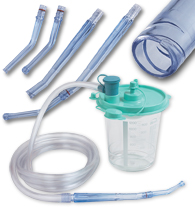 When we arrived at the hospital on Monday, June 15, Dad was upset because the
  During the afternoon, Svenja, the Trach Goddess of Scott & White, stopped by and downsized Dad’s tracheostomy tube. She discovered that the current tube was stuck, and she had a little difficulty removing it. Fortunately, removing the tube drew only a small amount of blood, and the new tube was inserted quickly and without any difficulty. The new tube had numerous benefits: it had a smaller outer diameter, a larger inner diameter, and could accommodate the
  As much as he was pleased to talk, he was equally disappointed when the nurse removed the speaking valve. Besides his not being able to sleep with the speaking valve in place, the valve also had to be removed whenever he received any sort of oxygen support.
 Tuesday, June 16, was another day of mixed news. Dad was talking and his WBC count was down to 8,300—a normal reading. The speech therapist, Holly, stopped by and administered a bedside swallow study—the first since he received the tracheotomy tube. Unfortunately, he failed it miserably. He coughed up pretty much all of the liquids. Holly gave us some very large, lemony Q-Tip-looking thingies to swab the back of his throat. Although just thinking about it makes you want to gag, it was supposed to stimulate swallowing. This therapy was to be repeated about five times daily.
 When we finally saw the doctor at 3:45 P.M., he
  That day I also accompanied Mom to see the neurologist. For the past month, our lives had revolved around my father, and it was easy to forget that
  Mom and Chris stayed home after lunch and tended to my parents’ vegetable garden, which seemed to be exploding with tomatoes and cucumbers. During the early afternoon, Dad had his CT scan, which showed that his right chest cavity still held excess fluid. The doctor said that he might need another chest tube to clear it. Later that afternoon, Dad and I watched “Jeopardy,” which was one of the few normal activities that we had shared in a long time. Today we were fortunate to have two separate visits from pastors Tom and Don. Dad always seemed to brighten up after visiting with them. As if to underscore the good feelings of the day, Michelle, another of our favorite nurses, stopped in for just a moment to tell Dad how good he looked. When we returned to see him after dinner, Dad was back on CPAP. His oxygen levels had dropped some and he would receive full oxygen support during the night.
 Tale of Two Parents