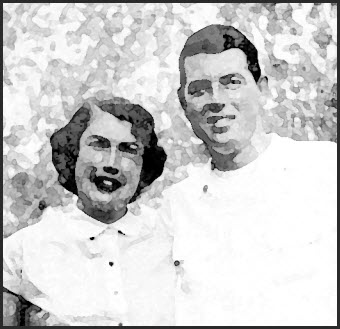

August 30, 2018. Mom and I arrived at Dad’s room at 8:00 A.M. Aspen, his nurse, and Amanda, his aide (CNA), were in his room and were changing his dressings and his hospital gown. I noticed that Dad’s breakfast tray had arrived and was still covered. When Aspen and Amanda had finished getting him ready for the day, Amanda and I helped Dad take an aspirin and a Midodrine pill with some of the Nepro on his tray. Nepro is a thick liquid, which helped to make the pills easier to swallow. When Amanda left, I grabbed a bath towel and placed it over Dad’s chest like a large bib. With some help from me, Dad ate most of his Cream of Wheat, a scrambled egg, a few swallows of Nepro, and a few sips of warm coffee. Dad had not consumed any caffeinated coffee for several months, but now I encouraged him to sip the coffee in the hope that it might help him to stay awake. His diet hadn’t restricted caffeine intake and caffeinated coffee was included on his tray, so I assumed that I wasn’t treading on dangerous ground, although assumptions in this place could be dangerous.
 Helping Dad to eat was a bit challenging because he periodically fell asleep during the meal. Whenever his eyes were closed, I stopped feeding him. I would not let him put anything in his mouth unless he was awake with both eyes open. When he was finished with breakfast, I noticed that he had dried blood under his fingernails, and I grabbed a washcloth from the linen cart and started cleaning his hands. He bled easily these days, so there was no telling how his nails got into that state.
At 9:30 A.M., I had just sat down after cleaning Dad’s nails when Dr. Hunt arrived. He said that the orthopedic resident had stopped by this morning to change the dressing on Dad’s surgical site and said that Dad’s scar was healing nicely.
 Dr. Hunt added that Dr. Garland from hematology/oncology had left a note in Dad’s chart, recommending that they stop giving Dad blood thinners. Evidently, the doctors were unable to determine if Dad had developed heparin-induced thrombocytopenia (HIT). This issue about blood thinners and HIT was frustrating, and it seemed like I couldn’t get a clear answer. Dad had a blood clot in his neck, he seemed to need a blood thinner during dialysis, and he had AFib, yet the doctors were withholding blood thinners. When Mom had a bleed that was most likely caused by Xarelto, the cardiologist just about had a conniption when the neurologist stopped her blood thinner. I can only surmise that every case is different and I shouldn’t try to apply a universal solution to an individual problem.
During Dr. Hunt’s visit, Dad slept like Sleeping Beauty and we could not rouse him. After the doctor left, I decided to get some coffee from the cafeteria to see if that would help keep Dad awake, but I couldn’t wake him enough for him to take a sip. I tried yelling at him and clapping my hands next to his ear, but nothing worked. I found this deep sleeping troubling. We had experienced challenges waking him during his hospital stay in 2015 that turned out to be nothing, but it still made me uneasy.
 At 10:30 A.M., Amanda removed Dad’s heart monitor in preparation for his MRI. Because Dad was still sleeping soundly, I assumed that he would be easy to move and would be still throughout the imaging. However, moments later, the door opened and Sharon and Jim, two of my parents’ neighbors, walked into the room. As soon as Sharon said hello, it was as if a switch turned on inside of Dad’s head. Not only was he awake, but he was also alert with moments of clarity. I jokingly asked if they could stay at the hospital with us. During both of Dad’s hospitalizations, he would instantly transform from a confused state or wake from a deep sleep when my parents’ close friends entered the room. I never had a chance to ask anyone about it, but I wondered why friends might have a greater impact on Dad than his immediate family. Their visit with Dad was cut short when the transportation team transferred Dad out of the room for his MRI.
Mom and I visited with Sharon and Jim in the 6 North waiting room for about 45 minutes. When they left, Mom and I decided to wait for Dad in his room. As we entered his room, it sounded like we entered a room full of crickets. That familiar sound meant that Dad’s hearing aids were somewhere in the room, and near each other, and generating a lot of feedback. I eventually found them in the drawer of the bed tray and plugged them into their charger, which stopped the aggravating noise. Aspen later told me that as they were moving Dad from his room, she suddenly remembered Dad’s hearing aids and stashed them in the drawer for safekeeping.
 Dad was still awake when he returned from his trip to the x-ray department. Moments after Aspen had him resituated in his bed, his lunch tray arrived. I was relieved that for once he would be able to eat a meal while it was hot. But as luck would have it, Angie and Judy from physical therapy arrived within seconds of the food tray. The hospital had its pecking order of providers and services at the hospital, and so did I. For me, physical therapy trumped food trays, so Dad would enjoy a lukewarm lunch after physical therapy.
The physical therapy team quickly got Dad sitting up on the side of the bed. Before they tried to have him stand, Angie hooked up his heart monitor while Judy adjusted the height of his walker. On the count of 3, they helped Dad stand up. He was still a little bent, but he stood up straighter than he had during his previous session. To help him stand straight, they had him look straight ahead at the large picture on the wall. Angie was able to get him to stand on his left foot and lift his right foot off of the floor. A few minutes into the session, they had a bit of a challenge getting Dad to keep his eyes open. I found it amazing that he could fall asleep during a physical therapy session. After Angie regained his attention, she had him stretch out his shoulders, and then she let him sit down on the side of the bed. After he rested for a few minutes, she had him stand up and then step to the left and then to the right, picking up his feet as he moved. Before they let him sit down again, he marched in place, albeit very slowly.
When he was back in bed, they had him lift each of his legs. Angie said that he did fine, but tomorrow she would like to see him lower them with more control (versus plopping them down on the bed). Because of his severe fluid overload condition before he entered the hospital, he would not have been able to lift his legs. Mom often had to lift his legs onto the bed at night. During this hospital stay, Dad had had several liters of excess fluid removed during his four dialysis sessions. His legs were now much leaner and lighter. I was glad that Mom was here to witness this good session. I had been disappointed that she had missed his first session with physical therapy.
After the therapists left, I was able to help Dad eat some warm soup and mandarin orange segments before the transportation tech arrived at 12:35 P.M. to take him to dialysis. Unless a problem occurred, dialysis sessions lasted about four hours. I assumed that Dad would not return to his room before 5:00 P.M.
After Dad was transported from his room, Mom and I ate lunch in the hospital cafeteria. Under normal circumstances, we would have returned home for a couple of hours, but Mom had an afternoon appointment with her cardiologist, whose office was on the first floor of the hospital.
Shortly before 2:00 P.M., David, the case manager, stopped by Dad’s room with a list of names of rehab facilities. Before Dad could safely return home, he would need a week or two of intensive physical and occupational therapy. We knew that we didn’t want to use Cornerstone, which is where he stayed following his previous surgery. The Brookdale Meridian, which is located less than three miles from my parents’ home, was Mom’s only choice. David wanted us to choose a couple of places, but we asked him to see if this one was available, and if not, we would choose another facility.
As we were walking to Dr. Ebert’s office at 2:30 P.M., my mobile phone rang and it was Jean from the Brookdale Meridian. She had a couple of questions about Dad and his possible checkout date. She also asked if I had any questions. If their care was anything like their responsiveness to new-patient referrals, Dad would be in good hands.
Mom’s visit with Dr. Ebert was basically routine, and she left this appointment with the medication refills that prompted her to make the appointment. Dr. Ebert is also Dad’s cardiologist, and she had many questions about his current status. I had contacted her before one of Dad’s appointments to inform her about his fluid overload condition, and she had tried to reinforce much of what I had been telling him about the consequences of his condition, with little or no effect.
 When Dad returned from his dialysis session at 5:15 P.M., he was still wide awake. According to Aspen, he had the dialysis nurse call the nurses’ station a few times to see if his wife was OK. Usually, Dad sleeps through dialysis, so Mom and I were surprised to see that he was awake and alert when he returned. I marveled at the change in him since this morning.
After Aspen changed Dad’s gown and linens, I helped Dad with his dinner. I noticed that it seemed to take him a long time to swallow. When I asked him if he was having trouble swallowing, he said, yes, a little bit. I gave him a few bites of turkey and gravy, beans, and he drank a little Nepro. When it seemed that it was taking him a long time to clear his throat, I asked again if he was having trouble swallowing and he said, yes. When I asked him to explain about the trouble that he was having, he started snoring, putting an end to our conversation and his dinner time. By now it was 6:45 P.M., and Mom and I were tired and ready to go home. On the way out, I quickly explained Dad’s situation to Aspen. When I got home, I texted Adan and expressed some concern about Dad’s problems with swallowing. He responded and said that he would stop by in the morning to check on Dad.
Dad’s days were such a mixed bag. The day could start bad and end bad with intervening good hours, or any combination of good and bad periods. I was frustrated that we couldn’t seem to get one solid good day.

 When Mom woke up at 6:00 A.M., she said that she was exhausted and that she was frustrated that she didn’t have time to do anything around the house. Last night, Stan and I had talked about trying to get Mom to stay at home and rest, so I took this opportunity to suggest that she stay at home this morning, and I would bring her with me to the hospital after lunch. She gratefully accepted my offer.
 Dr. Tanner, one of the
  So far, I’d seen everyone today that I wanted to see, with one exception: I had not seen Dr. Hunt. However, it was now 11:40 A.M., and I needed to get home for lunch. After a quick lunch, Mom and I returned to Dad’s room at 12:50 P.M. When I reached out to touch his right arm, I noticed that his gown was damp on his right shoulder. When I mentioned the damp gown to Aspen, she said that while I was gone, they tried to give him a pill and some water had spilled on his gown. I don’t know if I could swallow a pill while slumped down in bed, especially if I was in a groggy and confused state. I didn’t question her more, but I assumed that he was able to swallow the pill.
 At 8:15 A.M., Conner, Dad’s nurse, entered Dad’s room for the first time since the shift change at 7:00 A.M. Following our introductions, she accessed Dad’s chart and told us that Dr. Jennifer Moran, the attending physician for 6 North, had asked for someone in Orthopedics to look at Dad’s surgical
  I had barely finished speaking with Conner when someone from the Transportation team arrived to take Dad to IR. I should have learned a long time ago that schedules in the hospital were fluid and much like those of remodeling contractors. To help the Transportation aide prepare and move Dad to the gurney, Conner summoned Miguel, Dad’s aide (CNA). I learned then that Dad had indeed remembered reality and that it was Miguel who had interrupted Dad’s sleep early this morning.
 I had only planned for a short trip to Temple for Dad’s surgery on August 22, and I was now out of clean clothes. It seemed like my trip would be extended for some indeterminate time, so I had to wash some clothes before I could go to bed. I was tired and frustrated and capped off my evening by being a jerk and snapping at my exhausted mother.
 At 9:50 A.M., Adan arrived at Dad’s room with Emily, his trainee, to conduct a swallow assessment. I was relieved to see him and knew that Adan would conduct a proper assessment that wouldn’t adversely impact Dad. Before he started, Adan left the room to review Dad’s chart. Within moments of his return, the doctor and his entourage of residents and other providers stopped by Dad’s room for morning rounds, which meant that Adan had to postpone his assessment. After conferring with his associates for a few minutes, the doctor told me that Dad’s hemoglobin and platelets were low. It seemed counterintuitive to me, but the doctor said that he’d probably order blood thinner for Dad to address both problems. Because Dad’s
  At 11:00 A.M., Leslie removed Dad’s feeding tube. She then told me that she had started Dad on a new blood thinner to prevent clotting. Because his hemoglobin was low, he might receive a blood transfusion. We had been down this
  Shortly before noon, an aide from food service brought Dad his lunch tray. His first meal in five days consisted of puréed chicken noodle soup, milk, iced tea, and orange sherbet. Because he thought that the consistency of the soup was like a milkshake, he decided to use a straw to eat it, which proved to be very messy. While holding the bowl, he tipped it, and half of the soup ended up on the bed. He was able to consume some of it before he devoured the sherbet. Eating again was an important milestone. Although it had been a messy meal, I was practically giddy with relief that he had been able to eat.
 Dad’s status had improved dramatically. He no longer required medication to elevate his blood pressure, and now he was eating. He was still a sick puppy, but not sick enough to warrant ICU care. I had hoped that Dad would be moved from ICU to a patient room, but now that move seemed doubtful for today. The hospital generally does not like to move patients from ICU while they’re receiving blood. It was getting late, so we were not sure if the IR schedule could accommodate Dad.
 When I returned to my parents’ house, I wrote an enthusiastic email message to my sister-in-law, telling her about the turnaround in my father’s health in the past couple of days. Today had been a great day. Dad hadn’t had his fistula checked out, but it felt like he had turned a corner. Mom and I both felt optimistic about Dad’s prognosis.
 Dad had slipped down the bed, and I used the call button to summon a nurse to reposition him. Instead of Leslie, a male nurse and a female aide entered the room. I immediately recognized the nurse as Fred and said that the last time that I had seen him, his wife had just had a child. He recognized me but said that he didn’t think that I was correct because his youngest daughter was three years old. When I told him that Dad had been a patient here in 2015, he said that he hadn’t realized that that much time had elapsed. It seemed like a mini-homecoming in some alternate life.
 When we returned to the hospital at 1:30 P.M., I was surprised to see that Dad was off of dialysis. Leslie said that because his fistula had clogged, they had stopped his session 90 minutes early. Still, they were able to remove 2,225 ml. During the past two days, just over 4 liters of fluid had been removed, and Mom and I saw a noticeable difference in the size and weight of his legs.

 I had texted Pastor Tom several times yesterday and he finally responded shortly before 5:15 A.M. Unfortunately, his message said that he was out of town. He said that he would notify Pastor Brian about Dad. Although Mom and I would welcome a visit from Pastor Brian, Dad did not have a relationship with him. In addition to comforting us, Pastor Tom could often get a response from Dad.
 While I was waiting, I saw that Dad was restrained with soft restraints. I also noticed that he no longer had the
  When I got home at 10:30 A.M., I texted Stan to tell him that I was home. I tried to call my mother but all of my calls to Mom were directed to voicemail. Hoping that she might also have Dad’s phone with her, I called his number too, but with the same result. I finally gave up and called the SICU nurses’ station and asked Dad’s nurse to tell Mom that her phone was off.
 Stan had arrived home from work a little after 1:00 P.M. and by 2:00 P.M., we were on the road back to Temple. Thankfully, Stan said that he would drive. We usually shared the driving, but I had not had a chance to rest and was very tired. Stan hadn’t slept well last night either, so we stopped at
 I started having unsettling feelings of déjà vu when the nurse inserted a feeding tube at 12:15 P.M. I knew that it was necessary, but it seemed like a big step backward. A few minutes later, Dr. Jonathan Curley, the resident SICU doctor, asked us to leave the room because he wanted to start an
  Around 3:00 P.M., Dad’s first IV
 August 22. We all woke up earlier than necessary, and we were ready and in the car by 5:00 A.M. Needless to say, the streets of Temple were all but deserted at that time, and we were in the day surgery waiting room by 5:15 A.M. Dad’s name was called a few minutes later, and we rode the elevator to the second floor and located our surgical bay. We were greeted by Richard, one of Dad’s nurses, who handed Dad his surgical wardrobe. While Mom helped Dad to change into his surgical attire, I waited outside of the bay curtain.
 When I called Mom a couple of hours later, she told me that Dad had not walked or exercised since Stan and I had left on Sunday, three days ago. I suggested that she move Dad’s little step into the living room so it would be easier for him to access and perhaps use it. I didn’t think that it was a reasonable substitute for walking, but it was better than nothing. During our call, Mom told me that Dr. Ebert’s nurse had called to tell them that Dad’s November 20 nephrology appointment had been changed to Tuesday, July 31 (next week!), at 3:30 P.M. I was relieved that the appointment had been moved up because I didn’t think that Dad or his kidneys could wait four months to see a nephrologist. Also, with this schedule, I could do my volunteer shift at the wildlife center, drive to Temple for the appointment, and then come home on Wednesday in time for my shift in the cattery at the SPCA. Everybody wins.
 July 26. I called my parents’ home numerous times today, starting at 3:00 P.M. Finally, at 4:50 P.M., Mom answered the phone. I could hear Dad’s voice and a woman’s voice in the background, and Mom said that she would call me in five minutes. When she called, she told me that Dad had fallen while trying to walk from the car into the barber shop. As they were coming home, neighbor Jo’s aide saw them and offered to help. She wheeled Dad into the house and started bandaging his bloody arms.
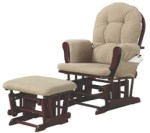 When I arrived at my parents’ home, Dad was sitting in a glider chair with his legs resting on an ottoman. It was the first time since his surgery in March that he had been able to get himself in this chair. In addition to it being much more comfortable than his wheelchair, having his feet elevated might help reduce the swelling in his legs. Unfortunately, while he was on the glider, he was watching the Texas Rangers beat the Houston Astros.
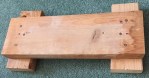 August 3-5. After Stan arrived home from work, we drove to Temple and spent the weekend with my parents. Dad ignored my requests to walk with him and did not walk during the weekend. He and Stan built a higher step, which Dad was excited about using. I still didn’t think that the step was a reasonable substitute for walking, but Stan gave me a look that suggested that I not raise any objections. Dad had enjoyed working on this little project with Stan and felt that it would help him. For me to raise objections wouldn’t accomplish anything and would only irritate Dad.
 When I called Mom this evening, I was pleased to learn that she waited only 15 minutes outdoors and then another hour inside. Even better, her license was renewed. One hurdle down, numerous more to go.
 Tale of Two Parents