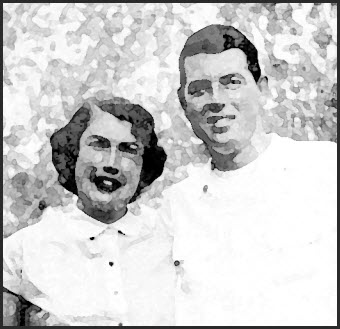

September 6, 2018. Yesterday had been a tough day for Dad, and Mom and I were a little anxious when we arrived at his room at 7:50 A.M. As we expected, Dad was sleeping. We noticed that his chin and pillowcase were soiled, and I couldn’t tell if it was pudding or blood. We chatted briefly with the night nurse and learned that she had used pudding as the delivery medium for Dad’s night meds. I wished that she had taken a couple of moments to wipe away the pudding on his face. It was now dry and very difficult to remove. She also said that he had had a very large bowel movement last night, which I hoped alleviated his bloated stomach problems that we had noticed yesterday.
 Dad’s food tray arrived shortly after 8:00 A.M., but I couldn’t feed him until he was more alert and repositioned in the bed. I used Dad’s call button to summon assistance from the nurse or aide (CNA).
At 8:15 A.M., Audrey (the PA) and Dr. Leung from cardiac electrophysiology stopped by. Audrey had visited yesterday and had told us that Dad’s current heart condition was not contributing to his current situation. She had brought Dr. Leung today to confirm yesterday’s assessment.
At 9:00 A.M., Nakita, Dad’s nurse, and her nursing student came in to administer Dad’s morning meds and reposition him in his bed. I had been unable to rouse him and was open to their suggestions. Nakita tried rubbing his chest, which seemed to annoy him but didn’t wake him. Once again, Nakita was unable to get Dad’s temperature.
 Right after they finished taking his vitals, Leslie walked in for Dad’s physical therapy session. Mom, Nakita, and I were shocked when Dad said hello in response to Leslie greeting him. Unfortunately, the interaction ended with hello, and Leslie was unable to rouse Dad enough for him to open his eyes. She said that she would try again later today. Having been unable to administer his morning meds or take his temperature, Nakita left the room. Like me, she had been a tad optimistic when Dad seemed to respond to Leslie.
Dr. Ashley Thomas, the attending physician, entered the room at 9:30 A.M. She said that Dad’s WBC count had moved from the 14-15 K range (slightly high) where it had been for the past few days to 32 K, and she suspected that he was septic. In response to his latest labs, she said that they had started him on a different antibiotic and that they were going to also test him for CDiff. When I asked about the diuretics, she said that nephrology wanted to give his kidneys a rest yesterday but that they might start them again today. Before she left the room, the doctor said that she would probably have Dad’s tunneled PICC line redone in case it might be the source of his infection.
 The doctor returned to Dad’s room a few minutes later with Nakita and the nursing student in tow. Dad seemed to be in a lot of distress, which the doctor thought might have been caused by a full bladder. She planned to scan his bladder and provide him with relief if that was the case. I asked about nourishment because he hadn’t eaten much since lunch yesterday. She said that she did not want to insert a nasogastric (NG) tube now because Dad had a lot going on at the moment.
After the bladder scan, Nakita wanted to bathe Dad, so Mom and I went to the 6 North waiting room. We were seated for only a moment when my parents’ friend, Sharon, texted me to get an update on Dad’s status. I told her that he had not improved since yesterday and that he seemed a bit worse.
 At 10:30 A.M., while Mom and I were sitting in the waiting room, the doctor sat with us and said that Dad’s distress had not been caused by his bladder, which was bad news because the problem could not be easily remedied. She also said that because the antibiotic required to combat CDiff must be administered orally, she had decided to insert the NG tube because Dad was not able to swallow pills. Although she would not know for 24 hours whether he had CDiff, she needed to start treatment now in case he did. She also said that they would give him some morphine to keep him comfortable.
When Mom and I told her that we would be leaving the hospital for lunch, she advised us to eat here. We found this guidance very unsettling, and I texted that information to my parents’ pastor.
Mom and I left Dad’s room while the nurse inserted his NG tube. Around 11:00 A.M., Sharon arrived with a box of cookies and pastries from a local bakery, saying that times like this required sugar. After waiting for what seemed like a long time, I excused myself and peeked into Dad’s room to see if we could return, which was a mistake. As I opened the door slightly, I saw that a couple of nurses were struggling with Dad as he whimpered and tried to push them away. It was a heartbreaking sight that I’ll probably never forget, although I hope that in time I will. I silently closed the door and returned to the waiting room and told Mom that they weren’t yet finished with Dad.
Around 11:30 A.M., Pastor Brian, the associate pastor, entered the 6 North waiting room. The four of us discussed how it was as important to die well as to live well, but Mom wasn’t willing to admit that Dad was dying.
When Pastor Tom joined us shortly after noon, Sharon left. Pastor Tom insisted that Mom and I eat something, but we weren’t hungry. After rejecting the pastors’ offers of food from various local restaurants, we finally settled on yogurt for Mom and hummus for me from the hospital cafeteria. The pastors supplemented our lunch choices with energy bars and candy. Because of Dad’s potentially contagious condition, the nurse suggested that we eat our lunch in the waiting room.
 A little before 3:00 P.M., our friends Earl and Marilyn arrived. Before we had learned of Dad’s current condition, Marilyn had told us that they wanted to visit Dad. I didn’t ask them to change their plans because they are such good friends, and I thought that Mom would benefit from their company. The doctor sat with the four of us to discuss Dad’s situation. She said that she had already contacted the Medical ICU (MICU) doctor. Because Dad’s blood pressure was dropping, he would need the type of pressors that the MICU could provide. We had a difficult discussion about whether or not to send Dad to the MICU. Mom felt that we should do whatever we could to help him live. I thought about what I believed that Dad would want. I was not convinced that a good outcome was in his future, even with MICU. If the end of Dad’s life was imminent, I wanted to let him go peacefully. I did not want the last hours of his life to be filled with the torture that I knew that he would endure in the MICU. However, Mom was unconvinced, so the doctor encouraged Mom to sit with Dad for a while. Although I knew that I was right, part of me wanted to be convinced that I was wrong.
Shortly before 3:45 P.M., we returned to Dad’s room where we received another update on his condition from Dr. Thomas. In addition to his other challenges, she said that his hemoglobin was now down to 5.8 (13 being normal), which meant that in addition to pressors to raise his blood pressure, he would need a couple of units of blood. As if this news wasn’t bad enough, she said that he was also bleeding from his intestine. As we stood in the center of Dad’s room, I hugged Mom, and we agreed to start comfort care. I told the doctor that our family was very small and very close. We loved this man dearly, and we now felt that we had to let him go. Through her tears, Dr. Thomas said that she thought that we had made the best decision for him.
As soon as we had made our fateful decision, Nakita and Amber, the charge nurse, started removing feeding tubes and oxygen. They also stopped Dad’s antibiotics and other medications. After withdrawing his medications, they began administering pain medicine and medication to slow his internal bleeding. The nurses cleared the room so that we could sit with Dad in private, promising to check in on us occasionally to see if we needed anything. The doctor said that we could use this time to settle any affairs or issues with Dad, but we didn’t have any. We were communicators and always told one another that they were loved. For the most part, we sat in painful silence and held Dad’s hands and kissed his face.
 At 4:15 P.M. Drs. Autumn Stratton and Michael Janes with palliative care stopped by. They said that with our permission, they would like to move Dad to the palliative care section of the hospital, where the nurses and staff were trained to work with end-of-life patients and their families. Mom and I agreed that it seemed like a good idea. Dr. Stratton said that she would check to see if they had any available rooms. As strange as it might seem, Mom and I didn’t understand the hospital process of dying and asked to speak with one of their social workers to clarify what was expected of the hospital and us. While Drs. Stratton and Janes were still in the room, Linda Parish, the social worker, visited us for a few minutes.
At 4:55 P.M., I told Nakita that we were leaving for a while. She said that they were cleaning a room in ST4. He would be moved soon, and she would call us with a room number when she knew it. The short ride home was difficult. We didn’t know how long Dad had, but we already felt the void that he would leave in our lives. I had been crying and my eyes felt like I had thrown salt in them, and Mom said that she felt the same way. Alternating waves of nausea and emptiness seem to flow over us.
 After consuming a glass of wine and some mixed nuts, we decided to return to the hospital. We left home about 6:30 P.M. As I was backing out of the garage, Nakita called to tell me that Dad was being transported to room STC 484. We arrived at the STC area just before the 7:00 P.M. shift change. Dad was still on a gurney that was parked outside of his room. He was breathing when he was brought to the room. After he was moved from the gurney to the bed, the nurses introduced themselves and said that they would return in a few minutes. We sat silently for a few minutes. Looking at Dad, his color seemed so different, and then Mom said that it didn’t look like he was breathing. I put my ear to his chest and couldn’t hear his heart. I took off my glasses and held them over his mouth, but he didn’t produce any noticeable fog. I opened the door and caught an aide as he was exiting the room across the hall. I told him that it didn’t seem like Dad was breathing. He ran down the hall to get our nurse and aide. They both listened for a heartbeat but heard nothing. It seems that he must have passed when they moved him from the gurney to the bed. We stayed in his room for another 30 minutes, and as we were leaving, the hospital chaplain intercepted us in the hall. We returned to Dad’s room to discuss how to proceed once we engaged a funeral home. I gave my father a final kiss and hug, Mom said goodbye to her husband of almost 70 years, and we left the hospital. As much as we hated visiting the hospital, it devastated me knowing that we wouldn’t be returning to see Dad.
I felt a hollowness that I had never known before, and I could only imagine how my mother felt losing the love of her life.

 As crazy as it might sound, during the past four months, “
 At 8:45 A.M., Leslie from PT stopped by. I updated her on Dad’s condition. While she was there, Dad mumbled something about killing the rooster. I explained that I had been singing “She’ll Be Coming ‘Round the Mountain,” which has a verse about killing the old red rooster, and she said that perhaps I needed to sing better songs. She then proceeded to sing the first verse of “
 Before Mom and I left his room, we noticed that Dad was totally engrossed in eating an unseen ice cream cone. His eyes were closed and he seemed happy as he carefully and methodically licked the ice cream from the cone. It was one of those moments that made you want to laugh and cry at the same time. I wished that he could have been as involved with us as he was with that ice cream.
 Mom was out of her heart medication and I wanted to pick up her prescription from the pharmacy before the hospital parking lot filled up. When we hadn’t heard from the nephrologist by 8:30 A.M., we left the hospital to pick up her Eliquis. As we were leaving, we encountered Dr. Hunt, the attending physician, as he was exiting from a crowded elevator. As we exchanged pleasantries, I expressed my concerns about Dad’s mentation and told the doctor that we were running an errand and would be available to speak with him soon.
 I arrived at Dad’s room at 7:45 A.M. His breakfast tray had arrived and was on his bedside table. He was still sleeping, but I was able to wake him easily. He finished about half of his breakfast before the physical therapist arrived. I never knew if we could expect to see a physical therapist on the weekend and I was pleased that Dad was being seen by a therapist during the holiday weekend. The session got off to a rocky start when the therapist accidentally dumped the contents of Dad’s urine bag on the floor. While she and the nurse cleaned the floor, which took a little over five minutes, Dad was able to sit without assistance on the side of the bed. The therapist was hesitant to have Dad stand up because his blood pressure was a bit low, but eventually, she decided to let him try. After standing, she retook his blood pressure, and it had elevated into the normal range. Because an aide didn’t assist her today, the therapist did not have Dad walk. Instead, she had him sit and stand a couple of times and then do some leg exercises on the bed.
 Unfortunately, the effect of the coffee was short-lived, and Dad fell asleep moments before Stan and Mom arrived. Although he was awake when Dr. Hunt, the attending physician, arrived, he was very groggy. When the doctor questioned Dad about why he was in the hospital, he said that he was in Temple because of a broken leg, which was closer to reality than his answers
 I was glad when Dr. Blake Tanner, the nephrology resident, entered the room, thinking that Dad might turn his attention to another subject. However, I was a bit disturbed when he could not answer the doctor’s questions about where he was or the year, which were daily questions to ascertain mentation. Dr. Tanner said that they would hold off on dialysis and diuretics today to see how Dad’s kidneys functioned. In one of the days where they gave him diuretics, Dad voided 300 ml of urine; on a day without diuretics, he voided 350 ml, so they wanted to see how his kidneys functioned today. Depending on today’s results, they might dialyze him tomorrow. The doctor checked for swelling in Dad’s legs, but they still seemed to be fine. He said that they were waiting on the results of the morning labs, but he didn’t think that they would see anything that would alter their plan. They hoped that the Midrodine would elevate Dad’s blood pressure enough to get the kidneys to produce more urine.
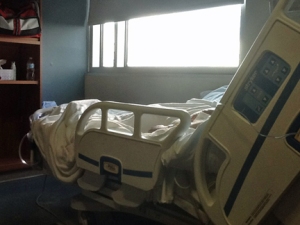 After waiting for 35 minutes, Storie and Miguel, the nurse and aide (CNA) entered Dad’s room. When I asked about the location of the bed, Storie told me that they had been told that they could not move the bed back to the center of the room because Dad was a fall risk and an escape artist. While they were changing Dad’s gown and adjusting his position in the bed so that I could raise the head of the bed, I ran downstairs for a cup of coffee. When I returned, I heated up Dad’s breakfast and started to feed him, but he fell asleep before we had made much progress. He still needed to take his morning meds, which was an ordeal when he was half asleep. Fortunately, he still had some Cream of Wheat in his bowl, and Storie was able to crush his pills and mix them in the warm cereal. He made a face as he took the nasty concoction, but at least we were successful in getting the pills in him without him choking on a liquid while trying to swallow the pills. By 9:10 A.M., Dad was sound asleep.
 At 11:45 A.M., Miguel took Dad’s blood sugar and it was 42 (normal is 100), which prompted him to call the nurse. Storie entered the room with Shelly, another CNA, and had him drink a couple swallows of orange juice. Shelly then had the nearly impossible task of getting Dad to consume a tube of a substance similar to Karo syrup. He hated the taste of it and she practically forced it into his mouth.
 At 3:15 P.M., the nurse pulled out Dad’s central line on the left side of his neck, which had been replaced by the tunneled line
 At 9:50 A.M., Adan arrived at Dad’s room with Emily, his trainee, to conduct a swallow assessment. I was relieved to see him and knew that Adan would conduct a proper assessment that wouldn’t adversely impact Dad. Before he started, Adan left the room to review Dad’s chart. Within moments of his return, the doctor and his entourage of residents and other providers stopped by Dad’s room for morning rounds, which meant that Adan had to postpone his assessment. After conferring with his associates for a few minutes, the doctor told me that Dad’s hemoglobin and platelets were low. It seemed counterintuitive to me, but the doctor said that he’d probably order blood thinner for Dad to address both problems. Because Dad’s
  At 11:00 A.M., Leslie removed Dad’s feeding tube. She then told me that she had started Dad on a new blood thinner to prevent clotting. Because his hemoglobin was low, he might receive a blood transfusion. We had been down this
  Shortly before noon, an aide from food service brought Dad his lunch tray. His first meal in five days consisted of puréed chicken noodle soup, milk, iced tea, and orange sherbet. Because he thought that the consistency of the soup was like a milkshake, he decided to use a straw to eat it, which proved to be very messy. While holding the bowl, he tipped it, and half of the soup ended up on the bed. He was able to consume some of it before he devoured the sherbet. Eating again was an important milestone. Although it had been a messy meal, I was practically giddy with relief that he had been able to eat.
 Dad’s status had improved dramatically. He no longer required medication to elevate his blood pressure, and now he was eating. He was still a sick puppy, but not sick enough to warrant ICU care. I had hoped that Dad would be moved from ICU to a patient room, but now that move seemed doubtful for today. The hospital generally does not like to move patients from ICU while they’re receiving blood. It was getting late, so we were not sure if the IR schedule could accommodate Dad.
 When I returned to my parents’ house, I wrote an enthusiastic email message to my sister-in-law, telling her about the turnaround in my father’s health in the past couple of days. Today had been a great day. Dad hadn’t had his fistula checked out, but it felt like he had turned a corner. Mom and I both felt optimistic about Dad’s prognosis.
 Dad had slipped down the bed, and I used the call button to summon a nurse to reposition him. Instead of Leslie, a male nurse and a female aide entered the room. I immediately recognized the nurse as Fred and said that the last time that I had seen him, his wife had just had a child. He recognized me but said that he didn’t think that I was correct because his youngest daughter was three years old. When I told him that Dad had been a patient here in 2015, he said that he hadn’t realized that that much time had elapsed. It seemed like a mini-homecoming in some alternate life.
 When we returned to the hospital at 1:30 P.M., I was surprised to see that Dad was off of dialysis. Leslie said that because his fistula had clogged, they had stopped his session 90 minutes early. Still, they were able to remove 2,225 ml. During the past two days, just over 4 liters of fluid had been removed, and Mom and I saw a noticeable difference in the size and weight of his legs.
 When I called Mom a couple of hours later, she told me that Dad had not walked or exercised since Stan and I had left on Sunday, three days ago. I suggested that she move Dad’s little step into the living room so it would be easier for him to access and perhaps use it. I didn’t think that it was a reasonable substitute for walking, but it was better than nothing. During our call, Mom told me that Dr. Ebert’s nurse had called to tell them that Dad’s November 20 nephrology appointment had been changed to Tuesday, July 31 (next week!), at 3:30 P.M. I was relieved that the appointment had been moved up because I didn’t think that Dad or his kidneys could wait four months to see a nephrologist. Also, with this schedule, I could do my volunteer shift at the wildlife center, drive to Temple for the appointment, and then come home on Wednesday in time for my shift in the cattery at the SPCA. Everybody wins.
 July 26. I called my parents’ home numerous times today, starting at 3:00 P.M. Finally, at 4:50 P.M., Mom answered the phone. I could hear Dad’s voice and a woman’s voice in the background, and Mom said that she would call me in five minutes. When she called, she told me that Dad had fallen while trying to walk from the car into the barber shop. As they were coming home, neighbor Jo’s aide saw them and offered to help. She wheeled Dad into the house and started bandaging his bloody arms.
 July 27. After spending a few hours away from home today, I logged on to Dad’s MyChart account and noticed that his Tuesday appointment with the nephrologist had been rescheduled to a date and time that I could not make. The change was required to accommodate a new appointment with the orthopedic surgeon. I called Mom to see if she would let me try to reschedule the nephrologist appointment to a more convenient time for me, and she agreed. I spent the next 30 minutes on the phone with a very patient woman who worked at the appointment desk at the dialysis center. I was able to reschedule the appointment with the nephrologist to Monday afternoon. It wasn’t the most convenient time, but I could make it work without missing any of my commitments or appointments in Houston.
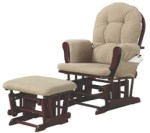 When I arrived at my parents’ home, Dad was sitting in a glider chair with his legs resting on an ottoman. It was the first time since his surgery in March that he had been able to get himself in this chair. In addition to it being much more comfortable than his wheelchair, having his feet elevated might help reduce the swelling in his legs. Unfortunately, while he was on the glider, he was watching the Texas Rangers beat the Houston Astros.
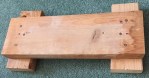 August 3-5. After Stan arrived home from work, we drove to Temple and spent the weekend with my parents. Dad ignored my requests to walk with him and did not walk during the weekend. He and Stan built a higher step, which Dad was excited about using. I still didn’t think that the step was a reasonable substitute for walking, but Stan gave me a look that suggested that I not raise any objections. Dad had enjoyed working on this little project with Stan and felt that it would help him. For me to raise objections wouldn’t accomplish anything and would only irritate Dad.
 When I called Mom this evening, I was pleased to learn that she waited only 15 minutes outdoors and then another hour inside. Even better, her license was renewed. One hurdle down, numerous more to go.
 When I spoke to Mom on the following day, she told me that Dad had had a good day in physical therapy and that they both liked the new therapist.
 When we arrived, I told Dad that I had taken care of tomorrow night’s dinner. He then told me that he had already planned Mom’s dinner, which surprised me. For many years, we had had an understanding that Mother’s Day dinner was my responsibility, although we often discussed the menu and the logistics of the meal. Now that he was confined to a wheelchair, I had assumed that he would not be able to share in the dinner preparation. Because I wanted to grill the steaks, a task better done in the evening, we agreed to have the steaks for dinner on Saturday and the dinner that he had planned on Sunday for the midday meal.
 May 14—17. Dad attended physical therapy today and would do so again on Thursday, three days later. He didn’t get out of his wheelchair on the days between his sessions; however, he felt especially positive after his Thursday session and said that he was getting ready to get rid of the wheelchair. I was hopeful that he had changed his attitude about exercising between sessions and that he was becoming inspired to get better.
 May 24. I suspected that Dad didn’t have the greatest physical therapy session today. According to Mom, Steve, the physical therapist, lectured Dad about the need to exercise between his physical therapy sessions. I hoped that Dad would listen more to Steve than he did to me. Dad had been out of the rehab center and had been attending outpatient physical therapy since mid-April and I could not see much of an improvement in his mobility. If anything, it seemed to be getting worse.
 During the first weekend of March 2016, our friends Mike and Rhoda visited my parents. The visit went well, and Dad walked around the house with little or no assistance from his cane. We were all pleased and impressed with his progress and felt that his recovery was nothing short of miraculous. Unfortunately, a couple of days after they left,
 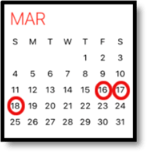 As March 2018 approached, these same friends asked if they could join Stan and me during one of our weekend trips to see my parents. My parents love our friends and were thrilled that they had time for a weekend visit. Not only did I look forward to Rhoda and Mike’s company, I hoped that they might be able to provide me with a little perspective. Dad and I are very much alike, and we have a history of digging in our heels. For the past few months, he and I had been locking horns about his
  Unlike during the visit of two years ago, Dad’s gait seemed unsteady to me, and I practically held my breath as he walked around the house. His legs were swollen, and I was pretty sure that the reason was that he was
  Fortunately, or unfortunately, my concerns were validated by my friends when they told me that they also thought that Dad seemed unsteady. My husband, who can usually talk me down when I’m overly concerned, didn’t help much when he said that he was also worried about Dad’s gait and the swelling in his legs.
 Tale of Two Parents