October 20, 2015. Dad slept well, waking only once during the night. At 4:30 A.M., I took a brief break from work to administer his Midodrine and his morning trach care. Gale and Dad were ready several minutes before the Scott & White ambulance arrived, and Dad was hooked up to the dialysis machine by 7:00 A.M.
Although Tuesday was the scheduled day for the aides to change, Gale had spoken with Becky, the owner of One on One Personal Care, and requested that they switch out on Wednesday to better accommodate Dad’s dialysis schedule, which could not change. Becky agreed and later sent me email, notifying me of Gale’s replacement tomorrow. According to Becky, “Michell is 47 years old and has 26 years of caregiving experience.” She continued by stating that Michell had fantastic references and came highly recommended. What Becky didn’t tell me was that she had just hired Michell yesterday.
When Dad and Gale returned from dialysis, she took him to his room and hooked him up to the humidified air and tube feed, and I administered his midday meds. Dad was tired from dialysis and drifted off to sleep.
 Shortly after lunch, a UPS driver rang our doorbell. He had come to pick up the “box” that contained the infant-sized trach care kits. When I pointed to the five-foot stack of six boxes, he said that his pickup request specified only one box. I apologized for the mix-up, sent him away empty-handed, and called American HomePatient. I had noted the woman’s name who had assisted me yesterday and was able to speak with her again. Evidently, our order had specified one case of FR-14 trach care kits, but the order pickers sent us six cases of FR-8 trach care kits. This discrepancy proved problematic for their inventory system and she said that she’d have to get back to me later.
After dinner this evening, we played cards, and Mom won again. The game ended at 8:30 P.M., at which time we started our nighttime regimen. Dad had slept well last night. I hoped that we could log two good nights in a row.
October 21. Dad, Gale, and I had a great night’s sleep. Although they both slept longer than me, I didn’t begrudge them their longer sleep. It was nice for me to score six hours of sleep. By 7:00 A.M., Dad had received his morning meds and trach care, and he was dressed and in the kitchen talking with Mom. Gale used their time in the kitchen to prepare to return home for the next seven days.
 While I was attending an online meeting at work, Michell, the new aide, arrived. Gale spent the next hour orienting her to the routine and her responsibilities. Before Gale left, she confided in me that she thought that she smelled cigarette smoke on Michell’s hands. To address her suspicions, Gale stressed to Michell that we had oxygen in the house and that smoke particles were a hazard for Dad because of his trach.
Gale filled a room with her presence and when she was gone, the house felt empty. Michell seemed a little slow getting started, but everyone paled in comparison to Gale.
At 12:30 P.M., I took a long lunch break and went to the dialysis center. Today was Dad’s first “plan of care” meeting between Dad’s dialysis team and me, his advocate. Dad would have his next meeting six months from now and then annually thereafter. During the meeting, I met Dad’s nephrology team: Susan (dietitian), Sue (dialysis nurse practitioner), Dad’s social worker, a couple of other providers, and Dr. Tony Issac (nephrologist), whom I knew from Dad’s stay at Scott & White Memorial. Sue and Susan were also members of my parents’ church, so I already knew three of the people on the team.
 Dr. Issac started the meeting by asking if we needed anything. Without any hesitation, I told him that I needed him to be Dad’s PCP. Dad was running out of several medications that required the authorization of a physician. I said Dad also needed referrals to see specialists. I told him that although I was an MBRT, I would really like Dad to see a pulmonologist. The room became quiet, people looked at one other for a moment, and the doctor gave me a questioning look. I responded by saying, “make-believe respiratory therapist.” He laughed. In addition to explaining the need for a pulmonologist, I told them about our difficulty in getting a referral to a wound care specialist and how I had had to order the Y extensions from Amazon.com.
Prior to this meeting, I had heard that Dad could not get his dialysis catheter wet. I asked about bathing, and they were practically militant in their response about the importance of keeping the port dry. Basically, this invasive device was like a highway to his heart and brain. Dampness could introduce infection, and we all agreed that we wanted to do everything possible to avoid introducing an infection into his heart. I explained that while Dad was hospitalized, I had become accustomed to seeing the results of his lab work. Even in the last week, his lab results fluctuated wildly. He had been away from the hospital for three weeks and I was nervous about how well he was doing. The only lab results that I had seen were specific to the kidneys. The doctor said that he could order additional lab work and monitor the results.
Finally, I mentioned Dad’s weight, which was now less than 135 pounds. When he was admitted to the hospital five months earlier, Dad weighed 161 pounds. I felt better now that we now had an IV pole on his wheelchair, which enabled him to continuously receive nutrition, but I thought that he needed more calories. Susan told me that I could increase the flow rate from 50 to 55 ml/hour. If he tolerated that, we could increase the flow by an additional 5 ml/hour. She thought that Dad should consult a gastroenterologist to see if the doctor would recommend a bolus feed.
Susan also said that Dad’s calcium levels were high, caused by his extended time in bed. She added that movement would help to decrease the calcium levels. It’s ironic that when you’re sedentary, calcium leaches from your bones and into your blood, which causes the high calcium levels in your blood and decreases your bone density. Although his bones could use extra calcium, I couldn’t give him any because of the calcium in his blood.
We also discussed different ways to weigh him. Unless they can weigh Dad, they cannot calculate a dry weight for him, which means that they’re guessing about how much fluid to remove. The scale at the dialysis center can accommodate a wheelchair, but nothing larger. Because Dad arrived on a gurney, they could not weigh him. They discussed different options, including a Hoyer sling. The dialysis center owns a Hoyer lift, but patients need to provide their own slings. Unfortunately, Medicare could not understand the use case of needing the inexpensive sling without the expensive lift. Someone joked that maybe we could buy a sling on Amazon.com. Dr. Issac pulled out his phone and learned that you could indeed. Nevertheless, we decided to wait until we could transport Dad in a wheelchair and weigh him at that time.
The doctor was very accommodating, and the general feeling in the room was one of awe. They could not believe that we had had so little support, and for all intents and purposes had been on our own. I left the meeting with an overwhelming sense of relief that we now had an additional support system. In addition to being able to call the various dialysis providers, I could also communicate with them via MyChart, the patient portal for Scott & White.
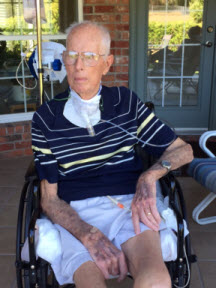
When I returned home, Michell watched while I administered Dad’s trach care and midday meds. Shortly after I returned to work, Brenda stopped by for Dad’s physical therapy session. I could not attend the session, but Michell said that she saw Dad stand up on his own by holding on to the bathroom sink. She watched the entire session and thought that he did pretty well. After Brenda left, Dad napped until I logged off from work.
The weather was still nice and the four of us enjoyed happy hour on the patio. After dinner, Michell passed our litmus test and joined us for a game of Oh Hell. Dad had now had two good nights in a row. After running through the nighttime routine with Michell, I hoped that Michell’s first night with Dad would be uneventful.
October 22. Like an answer to a prayer, Dad had another quiet night. Today was Michell’s first day of dialysis with Dad. I don’t know what went wrong, but Dad seemed to jump his groove during his morning routine, although he was still ready when the EMTs arrived at 6:15 A.M. Although Michell had several years of experience working in nursing facilities, she had never been in a dialysis center, so this was a new experience for her. She managed just fine and was able to administer Dad’s Midodrine two hours into his session. She also had pretty good luck with the ambulance, and she and Dad were home from dialysis by noon.
As usual, Dad was pretty wiped out from dialysis and took a nap shortly after I administered his midday meds and trach care. Dad slept until almost 4:00 P.M. and was ready for happy hour when I logged off from work at 5:00 P.M.
 I think that our family happy hour was a new experience for Michell. She didn’t drink, but she still joined us and we found that this time was perfect for getting better acquainted with the aides. Although Dad could not drink with us, he still ensured that we kept the bar refrigerator stocked with the beverages that the aides like to drink.
At the end of Michell’s second day with us, I wondered if Dad would have another good night, or if he’d initiate her with a night of coughing and attempted bed escapes. For the sake of all of us, I hoped that the quiet nights would continue.

 The nurses were ready for Dad when he arrived, so his dialysis session started at 6:30 A.M. Two hours later, his
  When he woke a couple of hours later, he was in a much better mood. Because Dad could not take anything by mouth, all of his meds were crushed, mixed with water, drawn into a large syringe, and inserted into his G-tube, directly into his stomach. When I reached for the Y extension line that connected the G-tube with the tube feed line and provided the input valves to the G-tube, a loose end came up in my hand. I didn’t know how long that it had been disconnected from the G-tube, but Dad and the bed were a sticky mess. It was as if we had thrown a couple of milkshakes in bed with him.
 Shortly after Dad’s return home from the CCH a few weeks earlier, Gale and I were careful about the way in which we handled the Y extension because we didn’t know how long the tubing or connectors would last. Just a few days ago, we had asked the nurse if she could acquire more of them for us. Fortunately, she was able to find one and it was still in its packaging. I planned to bring it with me to the hospital later today and was determined that we would not come home until it was securely inserted in Dad’s G-tube.
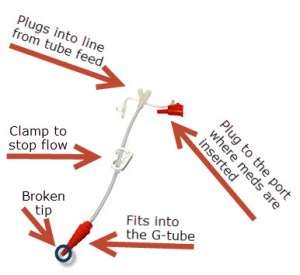 As I explained the problem, Dr. Klovenski enlisted the assistance of a medical student. This case was a little out of the ordinary and presented them with a problem-solving exercise that they never experienced in medical school. After gathering a variety of
  In addition to the lightheartedness of the visit, this trip to the hospital felt different for me too. From the moment that I arrived, everyone seemed to listen to what I had to say. I felt as if my IQ had suddenly increased. While Dad and I were waiting for the ambulance to take us home, one of the staff members asked me where I worked, and then it dawned on me. I had worn my navy scrubs: the color worn by RNs. Mom always told me to dress for success. I guess first impressions are important.
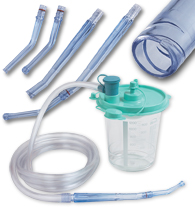
 While I had her on the phone, I told her that I also needed to order some Corpak Y Extensions to connect the tube feed tubing to the G-tube. She told me that she could not provide this item without an order from Dad’s primary care physician. I told her to forget it and that I would just buy them myself. She proceeded to lecture me about how I couldn’t just walk into a Walgreens and buy these supplies. During our call, I had my iPad sitting next to me, which I reached for during my lecture. She required a couple of minutes to complete her paperwork for the exchange order. Before our call had ended, I had placed an order with
 After lunch, Dad had Mom and Gale take him outside to check on the hoses in the backyard. My parents’ acre lot had quite a few young trees. Dad had set up permanent irrigation to some of the trees, but his system required that some hoses be moved among the trees. Diane had been his ready assistant a few days ago, and now it was Gale’s turn. Fortunately, Gale loved being outdoors.
 In addition to being concerned about all of the time that Dad was off of the humidified air, I was also concerned about the considerable amount of time he spent disconnected from his tube feed. The tube feed was available to him only in his room because his wheelchair had no IV pole to which to attach the Kangaroo pump that operated the feed. I suspected that he was receiving less than half of the protein and other nutrients that he needed. If I could attach the Kangaroo pump to the wheelchair, then he could receive nutrition all the time as he moved around the house, property, and elsewhere, except during dialysis. When I had called
  During the past few days, I had been discovering some of the flaws in the homecare system and Medicare. When the nurse encouraged us to take Dad to a wound care specialist, I called the nurse practitioner at the CCH for the referral and was told that Dad was no longer their patient and that we would have to get all of our referrals from his primary care physician (PCP). Dad had been hospitalized since May and hadn’t seen his PCP in almost two years. As a matter of fact, we had to cancel an appointment with her during his hospitalization. When I called the office of Dr. Sarla Patil, his PCP, and explained our predicament to her nurse, she said that the doctor could not provide any referrals or refill his prescriptions unless he came to her office. She went on to say that had Dr. Patil been the referring physician for homecare, then they could help, which was a nonhelpful and ridiculous comment. When I explained that he wasn’t ambulatory, she apologized and said that there was nothing that she could do. In desperation, I called the office of the doctor who had saved his life, Dr. Randall Smith. I spoke with his nurse, Christine, and explained Dad’s
  October 15. At 1:30 A.M., I was awakened by the sound of coughing coming through the baby monitor. I kept hoping that Dad would use the
  trach bib moistened with sterile water to provide some moisture to his lungs, he no longer was deprived of tube feed when he left the bedroom. Dad had to be more careful as he navigated the hallways to ensure that the pump didn’t hit the wall or knock photographs off of the wall.

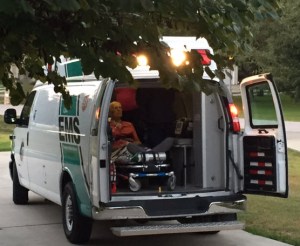 His dialysis session was happily uneventful, with no extra bleeding or trips to the hospital. To top it off, the ambulance was on time for the return trip, and Dad and Amanda arrived back home at 11:35 A.M., which was record time.
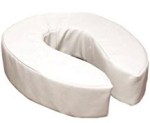 Although Dad seemed to like her, I wasn’t enamored with Amanda, and having a new aide would cause multiple interruptions in my work day to train another person. When the doorbell interrupted my pity party, my first thought was that I wasn’t in the mood for company, but I was relieved to see that we had just received a package from Amazon.com. Dad’s padded commode seat cushion had just arrived. The cushion was four inches thick and appeared as if it would have satisfied that
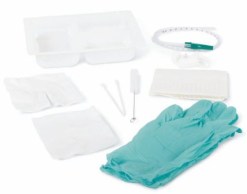 After Paula left, Dad napped for about 2-1/2 hours. By the time that he woke up, Mom, Gale, and I had eaten dinner. It had now been a week since I had changed Dad’s trach. I wanted to change it again before bedtime and before Gale ended her week with us. During normal trach care, I’d set up a TV tray next to the bed and lay out the contents of the kit. For the trach change, I grabbed another TV tray and set up the changing kit. I mentally ran through the changing routine a couple of times, took a breath, and got started. After donning the gloves, I attached the trach collar to the new trach, applied the lubricant to the trach, loosened the obturator and told Gale to make sure that I pulled it out after I inserted the trach. Trach tubes are very flexible, and the obturator provides the stiffness necessary to insert the trach. If I didn’t remove the obturator, then Dad couldn’t breathe. Now that the new
 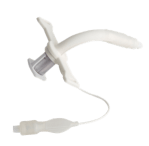 trach tube was ready, I removed the ties on his trach collar and then removed the trach from his throat, placed it on one of the TV trays, picked up the sterile trach tube, and inserted it. Because I was holding my breath and counting in my head, I knew that I had made the change in less than 8 seconds. Gale reminded me to remove the obturator, and Dad coughed up a huge wad of secretion, which I had been told was a good thing because it meant that the trach tube was properly placed.
 October 6. Today was a special day because it was Dad’s 87th birthday. Just
  Tale of Two Parents